ArborCrest Pest Control logoArborCrest Pest Control
Fast, upfront pest control services in Houston, TX, free quote in minutes

Pest Control Services Houston

ArborCrest Pest Control delivers technical perimeter defense and interior remediation across Harris County homes, establishing lasting structural exclusion without disruptive chemical broadcasts. Homeowners needing pest control services in Houston benefit from integrated entomological treatments that target wood-destroying subterranean termites, pervasive American cockroaches, and attic-dwelling roof rats.
Get your free pest control services quote, Houston

We only use your ZIP to check availability, no spam.

Subterranean Termite TreatmentRoach Remediation and Clean-OutAttic Rodent Exclusion and Trapping
Pest Control Services in Houston, TX
Pest Control Servicesin Houston, TX

What is Pest Control Services in Houston, TX?

Pest control services company in Houston is a specialized environmental management service that inspects properties, eliminates target insect and rodent populations, and installs perimeter barriers tailored to coastal Texas soil and humidity conditions.

Why Houston homeowners choose ArborCrest Pest Control

  • ✓On-site diagnostic inspections in Houston start at $150, establishing structural entry points, moisture readings, and species-specific infestation maps across Harris County properties.
  • ✓Initial residential defense treatments range from $185 to $350 based on square footage, foundation design, and exterior foliage clearance levels.
  • ✓Formosan subterranean termite treatments utilizing non-repellent liquid soil barriers typically span $950 to $2,400 across continuous structural building perimeters.
  • ✓Standard recurring protective barriers cost between $150 and $180 per visit on bimonthly schedules without binding long-term contracts.
Subterranean Termite Treatment
Roach Remediation and Clean-Out
Attic Rodent Exclusion and Trapping
Our Expertise

Our team services in Houston

Every service reflects the same meticulous attention to detail, whether it's a single job or a larger pest control services project across Houston.
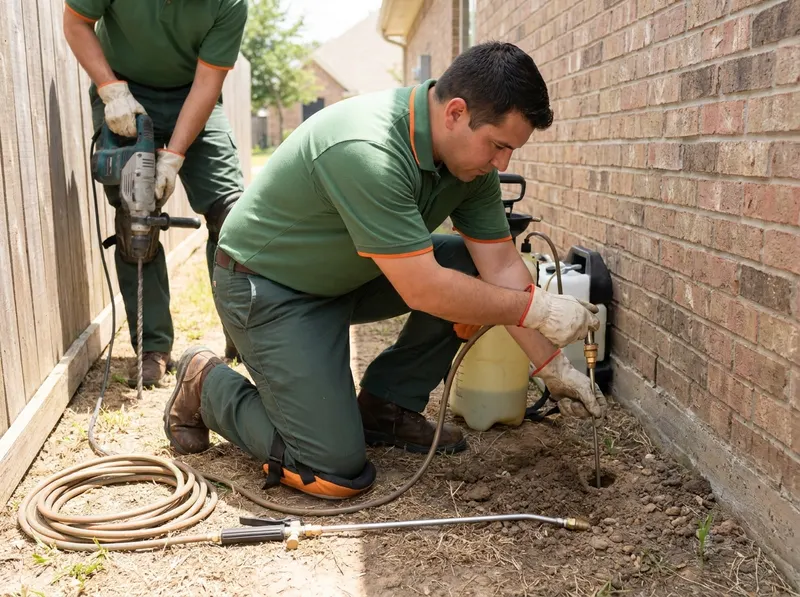
Subterranean Termite Treatment in Houston, TX

Subterranean Termite Treatment

Soil-applied non-repellent liquid barriers and localized termiticide injections designed to interrupt Formosan and Eastern subterranean termite colonies moving from moist Harris County soils into structural wall studs and framing sill plates. The treatment protocol adheres to technical guidelines published by the Texas A&M AgriLife Extension , establishing continuous chemical boundaries beneath structural slabs, patio abutments, and pier foundations. Technicians trench perimeter soil four to six inches deep, drill exterior concrete slabs along garage aprons at twelve-inch intervals, and rod liquid termiticide into subterranean soil beds where workers travel. This non-repellent chemistry allows foraging insects to pass through unawares, transferring the active ingredient back to the primary reproductive queen via social grooming cycles. We assess framing moisture with calibrated non-invasive pin meters, ensuring hidden dampness behind stucco or fiber cement siding is cataloged before structural integrity fails.

Get a quote →
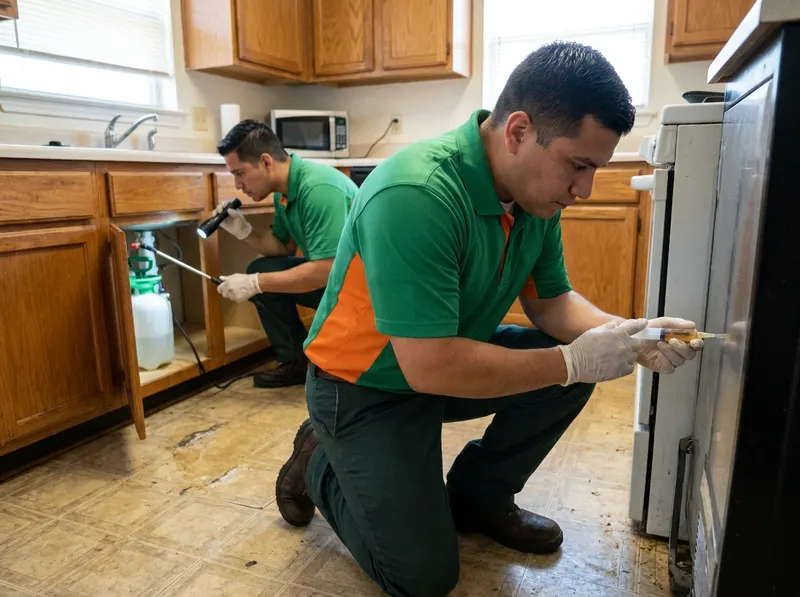
Roach Remediation and Clean-Out in Houston, TX

Roach Remediation and Clean-Out

Deep harborage flushing, insect growth regulator application, and micro-gel bait placements targeting German cockroach infestations in kitchen cabinetry and smoky brown roaches within plumbing pipe chases and wall voids. Our technicians implement treatment strategies aligned with the EPA Integrated Pest Management framework, isolating harborage points behind dishwashers, under sink basins, and along refrigerator compressor coils without applying airborne broadcast chemicals over food prep counters. We deposit specialized fipronil or indoxacarb micro-gel drops inside cabinet hinge recesses, electrical utility channels, and wall plate cutouts where juvenile nymphs feed. Complementary juvenile hormone regulators arrest reproductive cycles by preventing final-instar nymphs from developing functional wings or fertile reproductive systems. Thorough follow-up inspections conducted twenty-one to twenty-eight days later monitor egg case emergence from dropped oothecae, ensuring total eradication throughout multi-unit complexes or high-density residential subdivisions.

Get a quote →
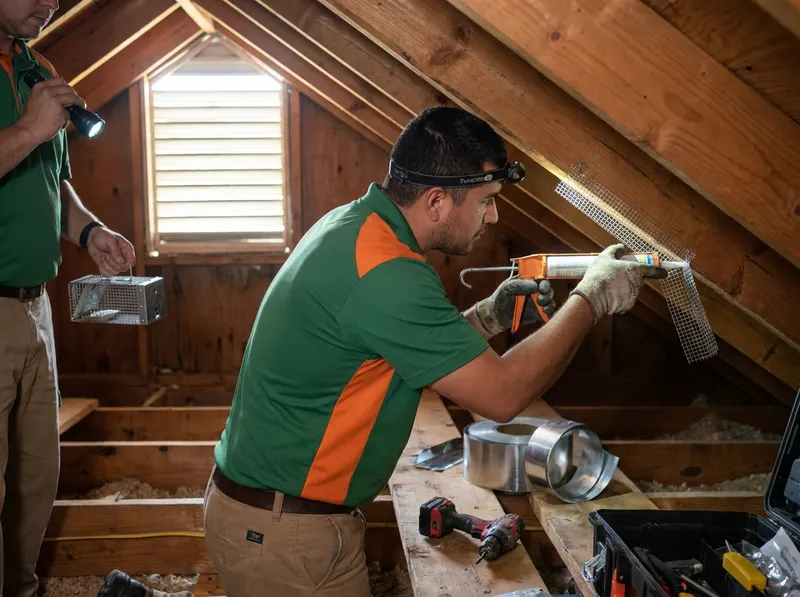
Attic Rodent Exclusion and Trapping in Houston, TX

Attic Rodent Exclusion and Trapping

Structural sealing of roof returns, louvered attic vents, and fascia junctions using industrial-grade metal flashing, paired with mechanical trapping grids to clear black roof rats from blow-in insulation layers. In strict accordance with the technical wildlife exclusion protocols from the National Wildlife Control Operators Association , our exclusion specialists survey rooflines from forty-foot ladders, identifying chewed soffits, gaps along lead plumbing stacks, and unsealed AC chase terminations. We seal gaps exceeding one-quarter inch using heavy 23-gauge galvanized steel mesh and high-density polyurethane backing to block persistent gnawing. Interior trapping grids deploy numbered, sensitive wooden and plastic snap traps placed along structural joist runways, attic duct supports, and wall headers, eliminating the risk of rodent mortality within inaccessible wall voids caused by neurotoxic baits. Daily or bimonthly trap auditing continues until seven consecutive zero-catch monitoring cycles confirm total interior clearance.

Get a quote →
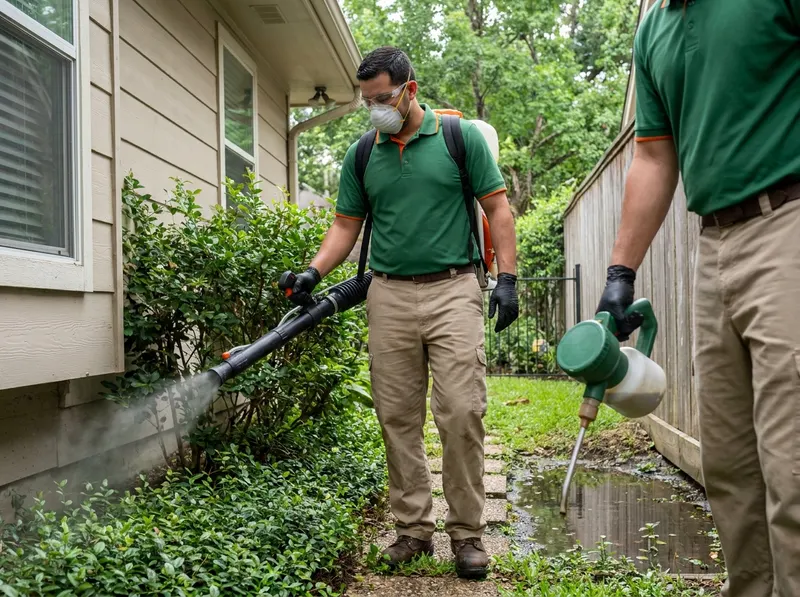
Perimeter Mosquito Fogging and Larvicide in Houston, TX

Perimeter Mosquito Fogging and Larvicide

Targeted fine-droplet barrier treatments applied to dense ground cover, ornamental shrub under-leaves, and standing water reservoirs utilizing bacterial larvicides that curb Asian tiger mosquito development throughout subtropical summer heat cycles. We deploy ultra-low volume backpack mist blowers to apply micro-encapsulated synthetic pyrethroids or essential botanical derivatives directly to shaded resting zones beneath live oaks, crepe myrtles, and dense azalea bushes. All treatments adhere to vector suppression standards outlined by the American Mosquito Control Association , avoiding flowering blooms, native pollination plots, and vegetable gardens to protect beneficial honeybees. For permanent or semi-permanent landscape drainage features, catch basins, and unchlorinated yard swales, we apply solid Bacillus thuringiensis israelensis (BTI) briquettes that release natural biological toxins fatal to developing aquatic larvae while remaining harmless to domestic pets, birds, and aquatic vegetation.

Get a quote →
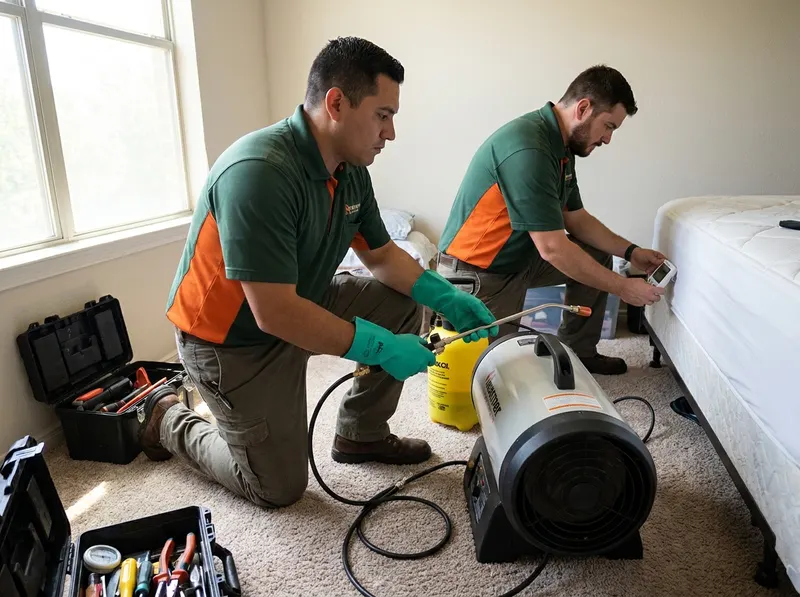
Bed Bug Thermal and Residual Eradication in Houston, TX

Bed Bug Thermal and Residual Eradication

Precision heat application combined with structural dust applications inside electrical receptacles, baseboard chases, and mattress seams to neutralize active bed bug nymphs and eggs without leaving persistent chemical scents. This process follows thermal eradication procedures approved by the Pest Control Technology technical network, elevating ambient bedroom temperatures to a lethal threshold between 122 and 135 degrees Fahrenheit using commercial electric heat systems and axial air movers. Concurrently, desiccant amorphous silica dust is injected into wall cavities behind baseboards, headboards, and bedside duplex outlets, penetrating tiny fissures where mobile adults shelter from high ambient light. Desiccants dismantle the waxy outer lipid layer of the bed bug cuticle, causing rapid dehydration and death within seventy-two hours of contact. Comprehensive physical mattress encasements seal box springs, ensuring long-term barrier protection and early physical detection if re-introduction occurs via travel luggage or guest apparel.

Get a quote →
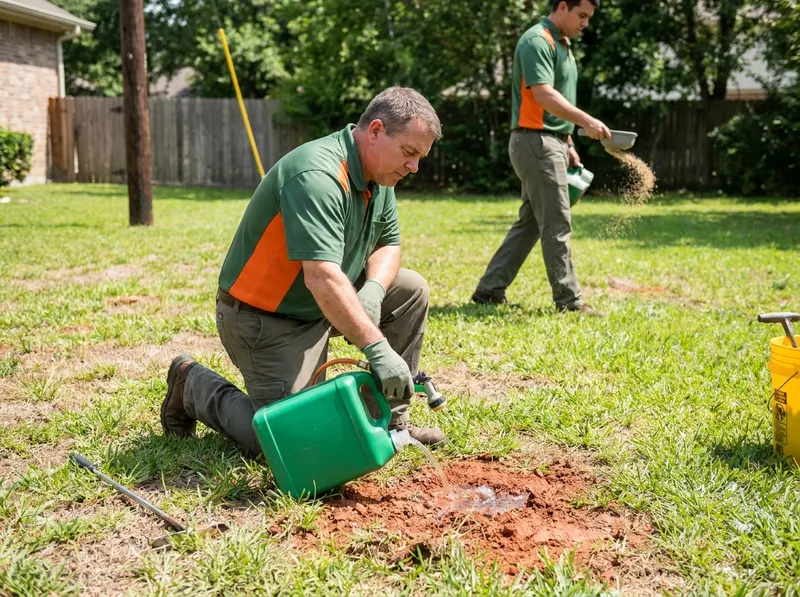
Fire Ant Mound Drenching and Yard Baiting in Houston, TX

Fire Ant Mound Drenching and Yard Baiting

Dual-action turf applications consisting of slow-acting reproductive sterilant baits distributed across lawn boundaries, combined with individual mound drenching to halt native and imported red fire ant colonies. Our technicians reference agricultural pest management literature from the United States Department of Agriculture to calibrate broadcast applications of s-methoprene and hydramethylnon granules across St. Augustine, Bermuda, and Zoysia turf. Foraging worker ants collect the lipid-coated bait within several hours, carrying active chemistry beneath the turf line to feed brood nurses and the egg-laying queen. For immediate safety around play equipment, stone patios, and driveway borders, high-volume soil drenches saturate active mound cores with fast-acting liquid contact insecticides, extinguishing defensive swarms within thirty minutes. This balanced protocol controls surface activity while preventing deep colony fissioning and secondary mound formation beneath concrete slabs during saturated weather.

Get a quote →
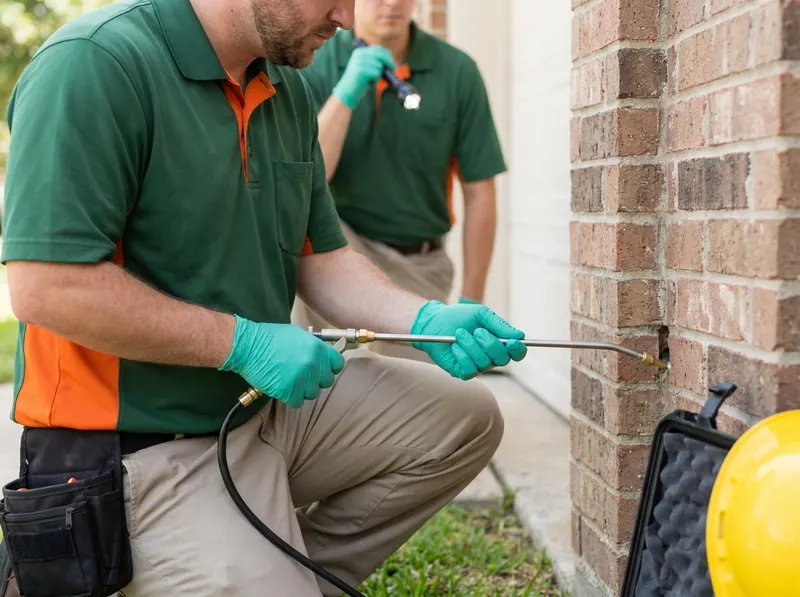
Carpenter Ant Void Injection in Houston, TX

Carpenter Ant Void Injection

Acoustic location and localized non-repellent foam injections delivered directly into moisture-compromised exterior wall framing, subflooring, and window frames harboring satellite carpenter ant nests. Technicians use stethoscope-style acoustic detectors and thermal imaging cameras to track gallery excavations inside structural members, referencing architectural diagnostic recommendations from the International Association of Certified Home Inspectors . Unlike termites, carpenter ants do not digest cellulose, instead hollowing smooth-walled nesting chambers inside damp, fungi-softened wall studs, window headers, and porch columns. We introduce expanding poly-core foam laden with non-repellent active ingredients into targeted five-sixteenths-inch drill access holes. As the dense foam expands throughout the concealed gallery network, it coats the ants, provoking mechanical grooming that spreads the active toxicant throughout the satellite nest and into external tree-dwelling parent colonies without requiring destructive wall demolition.

Get a quote →
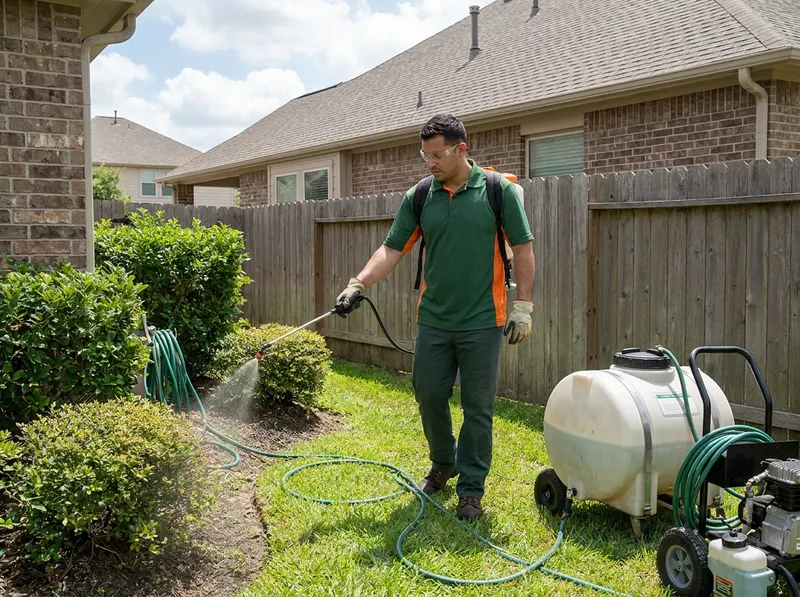
Fleas and Tick Yard Remediation in Houston, TX

Fleas and Tick Yard Remediation

Broad-spectrum juvenile hormone applications along shaded lawn perimeters, crawl space perimeters, and outdoor pet runs to break the reproductive cycles of dog ticks and cat fleas. Operating in alignment with vector guidance established by the Centers for Disease Control and Prevention , our technicians address outdoor pet gathering zones, mulch beds, and crawlspace perimeters with dual-action emulsifiable concentrates. The liquid barrier formulation blends an adult contact knockdown agent with pyriproxyfen, an insect growth regulator that renders unhatched flea eggs and tick nymphs incapable of molting into reproductive adults. Shaded soil margins under decks, elevated porches, and pine straw borders receive heavy spray volume to penetrate organic ground debris where pupal cocoons reside. We review landscape moisture, thatch depth, and low-hanging tree canopy density with homeowners, recommending cultural lawn care adjustments that limit moisture accumulation and restrict localized wildlife hosts like opossums and raccoons.

Get a quote →
The essentials

What Houston customers should know

  • On-site diagnostic inspections in Houston start at $150, establishing structural entry points, moisture readings, and species-specific infestation maps across Harris County properties.
  • Initial residential defense treatments range from $185 to $350 based on square footage, foundation design, and exterior foliage clearance levels.
  • Formosan subterranean termite treatments utilizing non-repellent liquid soil barriers typically span $950 to $2,400 across continuous structural building perimeters.
  • Standard recurring protective barriers cost between $150 and $180 per visit on bimonthly schedules without binding long-term contracts.
  • Physical rodent exclusion involving 1/4-inch galvanized hardware cloth, ridge vent enclosures, and metal weep hole covers begins at $350.
The ArborCrest Pest Control standard

Why Houston keeps calling us back

01

A clear, written price

You get a firm, itemized quote for your pest control services before any work begins, no surprises, no pressure.

02

Your property, protected

Careful prep, tidy work, and a full cleanup when we are done. We treat your home and belongings like our own.

03

One crew, start to finish

The same trusted, background-checked team from the first call to the final check.

Buyer's guide

Choosing the right pest control services pro in Houston

Selecting professional remediation requires evaluating property construction, foundation dynamics, and target pest biology across Southeast Texas. If sudden scratching sounds emerge in ceiling drywall or attic insulation, choose targeted mechanical rodent exclusion and multi-point sealing rather than standard interior bait placements. If small mud tubes appear along expansion joints or slab perimeters, choose non-repellent liquid soil treatments or localized termiticide injections rather than surface broadcast sprays.

The operational trade-off centers on upfront mechanical labor versus long-term recurring visits; structural exclusion demands higher initial capital investment to seal physical soffits, vents, and slab junctions, yet eliminates the ongoing dependency and chemical loads of perpetual monthly indoor treatments. When addressing acute indoor insect incursions like German roaches in wet galley kitchens, precision bait matrices and insect growth regulators provide localized colony elimination without broad aerosol residues, whereas outdoor landscape infestations such as invasive tawny crazy ants or red imported fire ants require continuous soil barrier drenches and slow-acting broadcast reproductive baits. Selecting an exterior barrier system preserves domestic air quality inside historic pier-and-beam homes throughout The Heights while defending high-moisture ground access points against subterranean invaders.

Conversely, choosing interior broadcast fogging provides rapid knockdown of active flying adults but leaves wall voids, plumbing chases, and insulation depths exposed to re-colonization within three to four weeks. Prioritizing architectural repairs, weep screen retrofits, and non-repellent liquid soil barriers establishes durable passive defense, lowering long-term maintenance costs and reducing annual chemical volume around living quarters. Homeowners who opt for low-cost retail chemical sprays often encounter localized chemical repellency, which scatters active worker colonies deeper into inaccessible structural framing and exacerbates wood decay throughout humid summer months.

Mechanical proofing combined with targeted liquid foundation chemistry stops pests before they reach wall framing, keeping internal living areas free from chemical drift. Homeowners can reach our team directly at (281) 270-1643 or text photos of structural access points, pest activity, or localized damage for initial evaluation.

Investment

Pest Control Services cost in Houston

Every project gets a firm, written price after a free on-site visit. Ranges below for orientation.

Initial Residential Pest Diagnostic & Treatment$185 - $350
Subterranean Termite Liquid Soil Treatment$950 - $2,400
Attic Rodent Exclusion & Clean-Out Base Package$350 - $850
Bimonthly Exterior Perimeter Maintenance Program$150 - $180
Severe German Roach Remediation (2-Visit Protocol)$275 - $550
Whole-Structure Bed Bug Elimination$650 - $1,800
Perimeter Mosquito Barrier Treatment (Seasonal Visit)$150 - $220
Carpenter Ant Wall Void Injection Package$375 - $725
Brick Weep Hole Exclusion & Sealing (Full Home)$250 - $600
Commercial Kitchen Bio-Foam Drain & Void Service$225 - $450
Crawling Insect Crawlspace Encapsulation Barrier$400 - $900
Exterior Fire Ant Turf Treatment (Up to 0.5 Acre)$175 - $325
Free, no-pressure estimate

Get it done right

Tell us about your pest control services job and we'll send a clear, written quote, usually the same day. Or just call and talk to a real Houston pro.

(281) 270-1643
Get your free pest control services quote, Houston

We only use your ZIP to check availability, no spam.

Where we work

Areas we serve near Houston

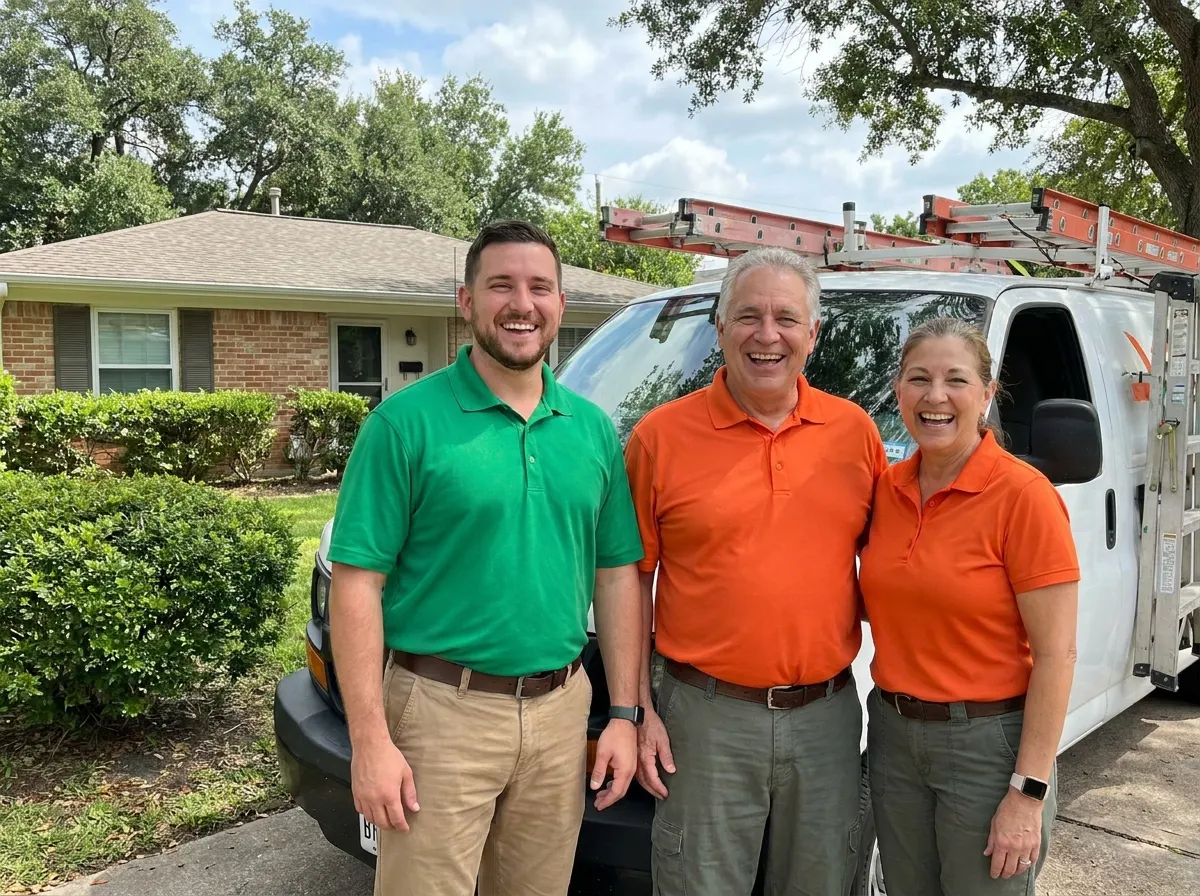
ArborCrest Pest Control pest control services team in Houston, TX

Houston properties rest on expansive Beaumont clay formations within the Gulf Coastal Plain, where alternating cycles of subtropical flooding and deep summer droughts force subterranean pests toward residential foundations. Severe soil expansion and contraction create continuous structural fissures along concrete slabs and plumbing rough-ins, forming direct travel pathways for wood-destroying subterranean termites and burrowing rodents. High ambient humidity hovering near 80 percent along natural bayou drainage corridors like Buffalo Bayou, White Oak Bayou, and Brays Bayou creates chronic structural moisture, causing window trim, fascia boards, and soffit timber to attract invasive Formosan termites and wood-boring carpenter ants. Older pier-and-beam foundations throughout historic neighborhoods like Montrose, The Heights, and West University Place provide unsealed underfloor cavities with damp soil environments, requiring specialized physical hardware screening to deter aggressive roof rat migrations and American cockroach populations. In master-planned woodsy subdivisions across Kingwood and Memorial, mature pine and oak canopies drop extensive organic debris on roofs, giving rodents and arboreal ants easy roofline access that bypasses conventional surface-level pesticide sprays. Neighborhoods built along low-lying drainage zones like Meyerland and Clear Lake City face heightened surface water saturation after major rainfall events, which drives subterranean insects upward into wall cavities and plumbing chases, necessitating resilient non-repellent exterior perimeter barriers that resist degradation from high ground moisture and intense ultraviolet radiation. Environmental pest remediation protocols throughout Harris County must address structural moisture loads, heavy seasonal rainfall, and high soil plasticity to sustain long-term perimeter defense.

The HeightsMontroseRiver OaksClear Lake CityMemorialWest University PlaceKingwoodMeyerlandMidtownOak Forest
Questions

Common questions

What specific factors determine pest control services pricing in Houston?
Pricing in Houston depends on structural square footage, foundation design, and target species biology. Conventional monolithic slab foundations require less specialized linear labor than historic pier-and-beam structures found in The Heights or Montrose, which feature extensive crawlspace surfaces requiring specialized encapsulation or perimeter barrier treatments. Severe subterranean termite colonies or entrenched German cockroach populations demand multiple product chemistries, precise structural injections, and mandatory 30-day follow-up evaluations that raise initial labor allocations beyond standard perimeter maintenance packages. Exterior landscaping features such as heavy wood mulch, dense ground cover, and overhanging tree canopies also increase the physical area and application volume required to establish an effective chemical barrier.
How frequently should Houston properties receive exterior perimeter treatments?
A bimonthly treatment frequency maintains an unbroken chemical and physical barrier under intense Gulf Coast ultraviolet radiation and torrential rainfall. Routine downpours and summer temperatures consistently exceeding 90 degrees Fahrenheit degrade exterior synthetic pyrethroids within 60 to 75 days, leaving micro-fissures in the barrier that foraging insects exploit. Establishing scheduled visits every two months ensures weep hole protections, foundation perimeter bands, and landscape bedding barriers remain active against continuous insect breeding pressure. For properties located directly adjacent to bayous, heavily wooded ravines, or unmanaged retention ponds, monthly perimeter treatments during peak summer months between June and September can offer extra protection against persistent mosquito and American cockroach pressures.
Are pest control products safe for indoor domestic spaces in Houston?
Professional pest interventions utilize low-volatility, EPA-registered formulations that dry completely within two hours and emit negligible airborne residues. Technicians apply targeted micro-gel baits, enclosed tamper-resistant stations, and deep-wall void foams rather than non-selective indoor aerosol sprays. Residents and domestic pets typically re-enter treated rooms shortly after liquid drying occurs, eliminating the lingering odors associated with legacy retail pesticide products. In interior food preparation zones, technicians prioritize mechanical harborage sealing, insect growth regulators, and non-repellent gel placements inside structural seams rather than surface chemical spraying, preserving domestic indoor air quality.
Why do roof rats continuously invade residential attics throughout Houston?
Roof rats exploit overhanging live oak canopy branches, utility lines, and architectural roof returns to bypass ground-level physical obstacles across Houston neighborhoods. Once on the roofline, these agile rodents slip through uncapped ridge vents, damaged louvered dormers, or construction gaps under asphalt shingles measuring wider than one-half inch. Houston's moderate winter temperatures allow roof rats to breed year-round, seeking warm attic spaces containing blown-in fiberglass or cellulose insulation for nesting material and food caches. Once inside, they gnaw on structural wiring, mastic-sealed HVAC ductwork, and PEX plumbing lines, generating structural hazards that require specialized metal exclusion rather than basic poison bait placements.
What preparation is required before professional termite treatments begin in Houston?
Homeowners must clear a 12-inch perimeter path along exterior foundation walls by trimming dense shrubbery, moving stored lumber, and pulling back organic pine straw mulch. Interior preparation involves clearing access to garage expansion joints, plumbing access panels, and bath traps where subterranean mud tubes frequently ascend. Technicians need uninterrupted access to perimeter soils to trench, inject, and establish continuous termiticide saturation around the structural footprint. In homes with finished patios, tiled exterior entries, or attached concrete walkways, small access holes are drilled through the masonry every twelve inches to inject non-repellent liquid termiticides directly into sub-slab soil zones, after which holes are patched with color-matched structural mortar.
How do technicians identify subterranean termite activity versus carpenter ant damage in Houston?
Subterranean termites leave telltale earthen mud tubes along exposed slab edges, foundation piers, and drywall surfaces, which protect worker termites from low indoor humidity. When they consume wood, they hollow out structural timbers along the softer springwood grain, packing the cavities with damp mud and fecal soil mixtures. Carpenter ants do not consume wood tissue; instead, they hollow out smooth, clean nesting galleries that resemble sanded wood, leaving distinctive piles of fibrous wood shavings, discarded ant body parts, and debris known as frass beneath their exit holes. Technicians confirm species using acoustic sensors, borescopes, and moisture meters.
What makes German cockroach elimination more difficult than treating American cockroaches?
German cockroaches reproduce indoors exclusively, carrying their egg cases until shortly before hatching, which shields offspring from exterior chemical barriers. A single female produces egg capsules containing up to forty nymphs, leading to exponential population growth inside kitchen wall voids, appliances, and cabinet hinges. American cockroaches primarily breed outdoors in storm drains, tree cavities, and sewer lines, wandering indoors accidentally through unsealed doors, plumbing chases, and brick weep holes. While exterior perimeter bands and mechanical weep baffles control American roaches, eliminating German roaches requires systematic indoor micro-gel baiting, void desiccant dusting, and insect growth regulators to interrupt reproductive lifecycles.
Can professional pest control eliminate standing-water mosquito problems in suburban yards?
Professional treatments combine fine-droplet adulticides applied to shaded foliage with biological larvicides applied to standing water sources to control backyard mosquito populations. Since mosquitoes require stagnant water to complete their aquatic larval cycle, applying bacterial Bacillus thuringiensis israelensis (BTI) dunks to French drains, low spots, and birdbaths kills developing larvae before they emerge as biting adults. For mature flying populations, backpack misting applies micro-encapsulated contact pyrethroids to the undersides of shrubbery, ground covers, and covered porch ceilings where mosquitoes harbor during hot daylight hours, reducing biting activity across treated yards for three to four weeks.
What steps are involved in sealing brick weep holes against pest intrusion?
Brick weep holes provide necessary ventilation and drainage for moisture that collects within exterior masonry wall cavities, meaning they cannot simply be sealed shut with solid caulking or mortar. Technicians install custom-fitted, breathable metal screening, such as stainless steel spring-compression covers or tightly woven copper mesh baffles. These metal inserts seat securely inside the vertical weep gaps along the slab line, blocking American cockroaches, spiders, mice, and juvenile rats from entering the wall cavity while allowing trapped wall condensation and air currents to flow unhindered. This mechanical retrofitting process provides permanent entry prevention without causing structural moisture damage to framing framing or drywall.
Why are non-repellent liquid termiticides preferred over older repellent chemical barriers?
Older repellent liquid barriers act as chemical fences that foraging subterranean termites detect and avoid, finding small untreated gaps, cracks in concrete, or un-trenched root zones to bypass the barrier and reach structural framing. Modern non-repellent termiticides are completely undetectable to foraging worker termites. Termites freely walk through the treated soil zone, unknowingly coating their cuticles and ingesting the active chemistry before returning to the colony. Through natural grooming, trophallaxis, and food sharing, the active ingredient transfers outward to nestmates, nymphs, and the reproductive queen, leading to total colony elimination within sixty to ninety days.
What attracts roof rats to modern PEX plumbing and electrical wiring in residential attics?
Attic-dwelling rodents must constantly gnaw on rigid surfaces to wear down their continuously growing incisor teeth, which grow several inches per year. Modern plastic PEX plumbing lines and thermoplastic electrical wire insulation have an appealing semi-flexible density that rodents chew easily. Gnawing on pressurized PEX lines frequently causes severe slow plumbing leaks or sudden high-volume ceiling water damage, while stripping plastic insulation from copper electrical wiring creates active spark hazards within dry fiberglass attic insulation. Identifying rodent activity early through physical dropping inspections and attic runway tracking prevents catastrophic domestic water leaks and electrical fires.
How does expansive clay soil impact foundation pest entry points across Harris County?
Beaumont and Lake Charles clay soils across Harris County have high shrink-swell ratios, shifting significantly between rainy periods and extended summer droughts. During dry periods, the soil pulls away from foundation perimeters, leaving wide gaps that expose subsurface slab footings, plumbing penetrations, and expansion joints. In rainy seasons, the swelling soil exerts lateral pressure on the concrete, creating micro-fractures and shearing plumbing cleanouts beneath the foundation. Subterranean termites, rover ants, and burrowing insects exploit these subsurface soil gaps and slab fractures, using them as express corridors directly into exterior wall studs without ever building visible mud tubes along the exterior brick face.

Get started today

Free estimates for Houston & the surrounding area.

For standards, safe disposal, and service guidance on pest control services in Houston, TX, useful references include U.S. EPA, ENERGY STAR, U.S. Dept. of Energy, Consumer.gov, U.S. Census Bureau, and Google Maps. General consumer and small-business resources are available from USA.gov, Better Business Bureau, FTC Consumer Advice, U.S. Small Business Administration, and Ready.gov.

Houston pest control services guides

How much does professional pest control services cost in Houston?, Pricing Guide →What is the average cost for termite treatment in Houston TX?, Complete Guide →Can I get same-day pest control services in Houston for a roach infestation?, Complete Guide →Pest Control Services →