Thermal eradication operates on insect physiology. Controlled convective heat units circulate air to achieve an ambient structural temperature of 122°F (50°C), a threshold documented by the EPA Bed Bug Management…
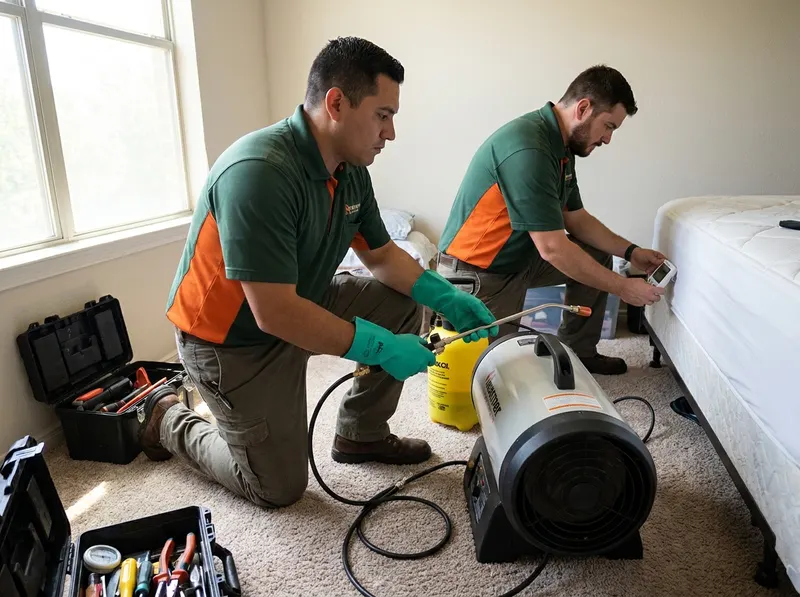
Thermal eradication operates on insect physiology. Controlled convective heat units circulate air to achieve an ambient structural temperature of 122°F (50°C), a threshold documented by the EPA Bed Bug Management Guidelines to denature essential proteins across adult, nymph, and egg stages. In subtropical Gulf Coast climates like Harris County, bed bugs establish persistent colonies within baseboards, behind drywall seams, and within upholstered materials. The protocol combines this thermal envelope with localized residual applications regulated by the Texas Department of Agriculture Structural Pest Control Service. Rather than routine broadcast spraying that introduces volatile odors, technician teams deploy discrete desiccant dusts such as amorphous silica gel inside wall cavities and apply liquid residuals along structural tracking paths. Guidance from the Pest Control Technology technical portal indicates that integrating heat with long-tail residuals prevents surviving satellite insects from migrating into adjacent rooms during the temperature ramp-up phase.
Local housing stock across Houston influences heat retention and application design. Historic pier-and-beam homes in The Heights, Montrose, and West University Place present ventilated subfloors that require perimeter insulation monitoring to maintain structural thermal thresholds. Conversely, slab-on-grade brick homes in Meyerland, Memorial, and Oak Forest hold ambient warmth efficiently but require strategic circulation around insulated exterior walls to ensure thermal penetration into deep harborages. Multi-family mid-rises in Midtown and sprawling residential properties in Kingwood or Clear Lake City present unique airflow dynamics. ArborCrest Pest Control uses wireless remote thermal sensors calibrated to standards recognized by the National Institute of Standards and Technology, ensuring furniture cores and wall recesses reach the required lethal duration without damaging sensitive architectural finishes.
Operational execution follows strict procedural stages. Technicians place diagnostic monitors, direct high-output axial air movers, and run industrial glycol or electric heat systems powered by external mobile generators to protect household circuits. The process aligns with safety standards outlined by the Occupational Safety and Health Administration and fire-prevention codes established by the National Fire Protection Association. For homeowners deciding between standalone liquid treatments and combined thermal remediation, the trade-off centers on prep labor versus resolution speed: standalone chemical sprays require repeated visits over four to six weeks and extensive bagging of personal effects, whereas a thermal-residual hybrid resolves active colonies in a single day while leaving a protective, odor-free barrier that persists for months.
Technical preparation involves removing aerosol containers, wax products, and heat-sensitive vinyl, while clothing remains hung in closets where penetrating heat can circulate. Work practices incorporate safety recommendations from the Centers for Disease Control and Prevention and protocols cataloged by the National Pest Management Association. Structural remediation finishes with the deployment of perimeter treatments conforming to the National Pesticide Information Center environmental standards, preventing re-infestation via building conduits. Homeowners can reach ArborCrest Pest Control at (281) 270-1643 or text photos of suspected activity to verify signs prior to scheduling an on-site inspection.
Every job gets a firm, written price after a free on-site visit.
For standards, safe disposal, and service guidance on pest control services in Houston, TX, useful references include U.S. EPA, ENERGY STAR, U.S. Dept. of Energy, Consumer.gov, U.S. Census Bureau, and Google Maps. General consumer and small-business resources are available from USA.gov, Better Business Bureau, FTC Consumer Advice, U.S. Small Business Administration, and Ready.gov.
Tell us about your bed bug thermal and residual eradication job in Houston and we'll send a clear, written quote, usually the same day.
 ArborCrest Pest Control